
The Famous Carnegie Deli
Long before the publicity-savvy owners named a gut-busting pastrami-and-corned-beef sandwich after him, a struggling Woody Allen found a comforting refuge in the Carnegie Deli as he honed his comedic chops.
“I used to eat at the Carnegie long before I became a comedian because the food was delicious, and in those days, I had no fear of eating corned beef, pastrami or any other things that now I feel would destroy my life,” the 81-year-old filmmaker told The Post about the Big Apple landmark, which will serve up its last meal on Friday night.
For over 10 year, we've been taking the long drive to pick you up the world's BEST corned beef for St. Patrick's Day. Why?
Long before the publicity-savvy owners named a gut-busting pastrami-and-corned-beef sandwich after him, a struggling Woody Allen found a comforting refuge in the Carnegie Deli as he honed his comedic chops.
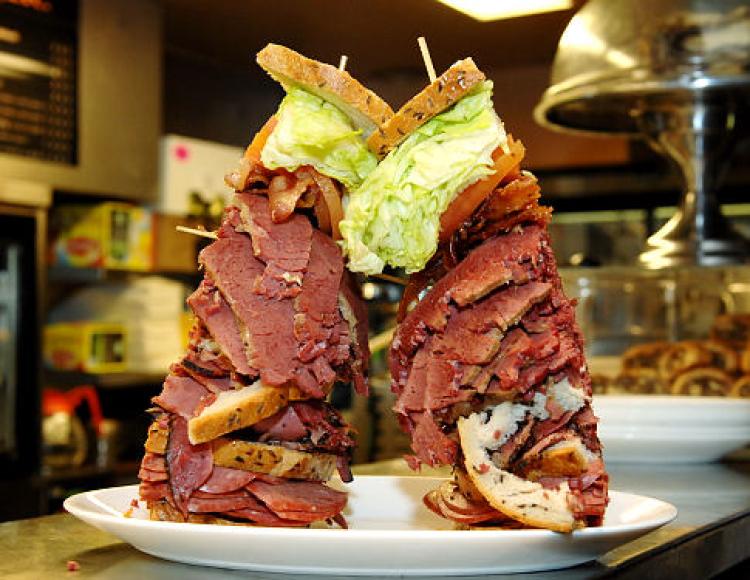
“I used to eat at the Carnegie long before I became a comedian because the food was delicious, and in those days, I had no fear of eating corned beef, pastrami or any other things that now I feel would destroy my life,” the 81-year-old filmmaker told The Post about the Big Apple landmark, which will serve up its last meal on Friday night.
It was the ’50s and early ’60s, and Allen wasn’t the only one seeking solace in the snappy late-night patter and fragrant pleasures of smoked meats, chopped liver and latkes at the classic Jewish deli on Seventh Avenue at 55th Street, near Carnegie Hall.
Modal Trigger
Woody Allen at Carnegie DeliJane Martin McGrath
“It was a great place to sit around and talk with other comedy writers,” Allen said.
Even after he became a wildly successful writer, stand-up comic and director, the atmosphere — and the mouth-watering menu — kept him coming back.
Allen immortalized his love affair with the deli when he used it as the setting for much of the 1984 comedy “Broadway Danny Rose” — in which he played a fast-talking but hapless talent agent who pretended to date a character named Tina, played by Mia Farrow.
One of Allen’s characters regaled a gang of fellow showbiz types gathered at the deli with the tale of how Tina, a former mob moll, was dating one of his clients.
SEE ALSO
Woody Allen orders a 'Woody Allen' at Carnegie Deli
“I got to eat there all the time and was able to rationalize it because I was working there, even though I knew how bad it was for me,” Allen said.
“So when I was working there and work necessitated that I eat there all the time, I was able to get past my guilt over that amount of pleasure in that short of space.”
Allen was far from the only celeb to nosh at Carnegie over the years; the walls are covered with scores of framed shots of politicians, sports heroes, actors, performers and others too numerous to mention.
Celebs like Henry Kissinger, Meryl Streep, Bob Fosse, Warren Beatty and John Glenn plus many others stopped in over the years for a bite.
Henny Youngman, the king of one-liners, was a regular and eulogized co-owner Leo Steiner on his death in 1987 as “the deli lama.” In fact, Steiner’s service was more of a yuckfest than a time for tears.
“Whaddya mean, ‘Is chicken soup good for you?’ You ever see a chicken with a cold?” Steiner cracked on a videotape that was shown during the memorial.
Steiner and two partners, Fred Klein and Milton Parker, bought the Carnegie in 1976 from the original owners, who had run it since 1937.
Parker — known as the Chief Pastrami Maven — was known for starting every workday by chowing down on a foot-long frank.
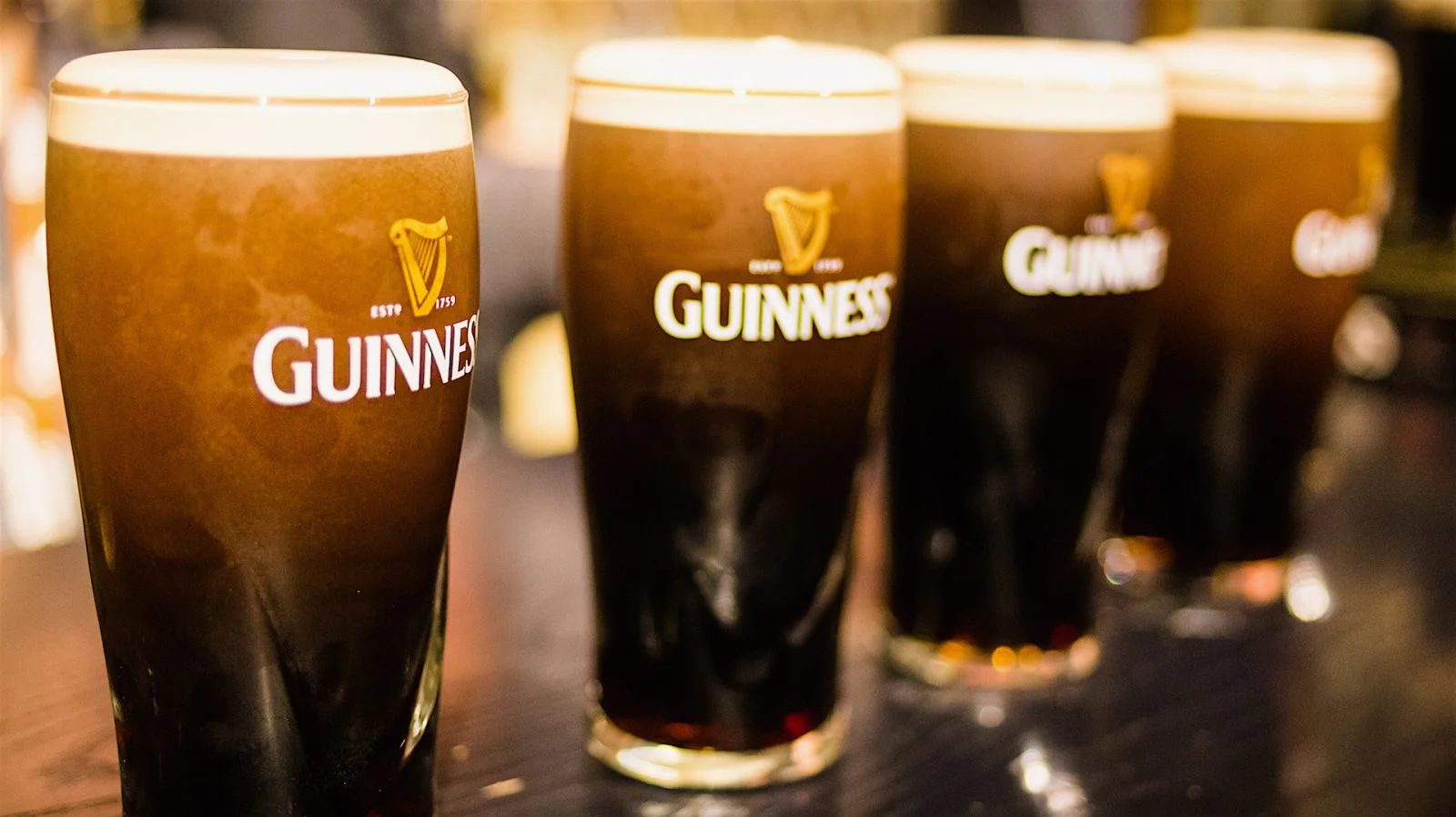
Is Guinness Really Good For You?
"The original Guinness is a type of ale known as stout. It's made from a grist (grain) that includes a large amount of roasted barley, which gives it its intense burnt flavor and very dark color. And though you wouldn't rank it as healthful as a vegetable, the stouts in general, as well as other beers, may be justified in at least some of their nutritional bragging rights."
Guinness, like other Irish stouts, enjoys a seasonal popularity every St. Patrick's Day. It has also been touted as being "good for you," at least by its own advertising posters decades ago.
But can this creamy, rich and filling beer really be added to a list of healthy beverages? Or is its reputation just good marketing? We researched the beer's history and talked to brewing experts and break out the good, the not-so-great and the ingenuity of Guinness.
The good
The original Guinness is a type of ale known as stout. It's made from a grist (grain) that includes a large amount of roasted barley, which gives it its intense burnt flavor and very dark color. And though you wouldn't rank it as healthful as a vegetable, the stouts in general, as well as other beers, may be justified in at least some of their nutritional bragging rights.
According to Charlie Bamforth, a professor of brewing sciences at the University of California, Davis, most beers contain significant amounts of antioxidants, B vitamins, the mineral silicon (which may help protect against osteoporosis), soluble fiber and prebiotics, which promote the growth of "good" bacteria in your gut.
Most U.S. beers to get calorie and ingredient labels
And Guinness may have a slight edge compared with other brews, even over other stouts. "We showed that Guinness contained the most folate of the imported beers we analyzed," Bamforth said. Folate is a B vitamin that our bodies need to make DNA and other genetic material; it's also necessary for cells to divide. According to his research, stouts on average contain 12.8 micrograms of folate, or 3.2% of the recommended daily allowance.
Because Guinness contains a lot of unmalted barley, which contains more fiber than malted grain, it is also one of the beers with the highest levels of fiber, according to Bamforth. (Note: Though the USDA lists beer as containing zero grams of fiber, Bamforth said his research shows otherwise.)
Bamforth researched and co-authored studies recently published in the Journal of the Institute of Brewing and the Journal of the American Society of Brewing Chemists, The Science of Beer.
Here's more potentially good news about Guinness: Despite its rich flavor and creamy consistency, it's not the highest in calories compared with other beers. A 12-ounce serving of Guinness Draught has 125 calories. By comparison, the same size serving of Budweiser has 145 calories, a Heineken has 142 calories, and a Samuel Adams Cream Stout has 189 calories. In the United States, Guinness Extra Stout, by the way, has 149 calories.
This makes sense when you consider that alcohol is the main source of calories in beers. Guinness Draught has a lower alcohol content, at 4.2% alcohol by volume (ABV), compared with 5% for Budweiser and Heineken, and 4.9% for the Samuel Adams Cream Stout.
In general, moderate alcohol consumption -- defined by the USDA's dietary guidelines for Americans as no more than two drinks per day for men or one drink per day for women -- may protect against heart disease. So you can check off another box.
The not-so-great
Guinness is still alcohol, and consuming too much can impair judgment and contribute to weight gain. Heavy drinking (considered more than 15 drinks a week for men or more than eight drinks a week for women) and binge drinking (five or more drinks for men, and four or more for women, in about a two-hour period) are also associated with many health problems, including liver disease, pancreatitis and high blood pressure.
According to the National Council on Alcoholism and Drug Dependence, "alcohol is the most commonly used addictive substance in the United States: 17.6 million people, or one in every 12 adults, suffer from alcohol abuse or dependence along with several million more who engage in risky, binge drinking patterns that could lead to alcohol problems."
And while moderate consumption of alcohol may have heart benefits for some, consumption of alcohol can also increase a woman's risk of breast cancer for each drink consumed daily.
Many decades ago, in Ireland, it would not have been uncommon for a doctor to advise pregnant and nursing women to drink Guinness. But today, experts (particularly in the United States) caution of the dangers associated with consuming any alcohol while pregnant.
"Alcohol is a teratogen, which is something that causes birth defects. It can cause damage to the fetal brain and other organ systems," said Dr. Erin Tracy, an OB/GYN at Massachusetts General Hospital and Harvard Medical School assistant professor of obstetrics, gynecology and reproductive gynecology. "We don't know of any safe dose of alcohol in pregnancy; hence we recommend abstaining entirely during this brief period of time in a woman's life."
What about beer for breastfeeding? "In Britain, they have it in the culture that drinking Guinness is good for nursing mothers," said Karl Siebert, professor emeritus of the food science department and previous director of the brewing program at Cornell University.
Beer in general has been regarded as a galactagogue, or stimulant of lactation, for much of history. In fact, according to irishtimes.com, breastfeeding women in Ireland were once given a bottle of Guinness a day in maternity hospitals.
According to Domhnall Marnell, the Guinness ambassador, Guinness Original (also known as Guinness Extra Stout, depending on where it was sold) debuted in 1821, and for a time, it contained live yeast, which had a high iron content, so it was given to anemic individuals or nursing mothers then, before the effects of alcohol were fully understood.
Some studies have showed evidence that ingredients in beer can increase prolactin, a hormone necessary for milk production; others have showed the opposite. Regardless of the conclusions, the alcohol in beer also appears to counter the benefits associated with increased prolactin secretion.
"The problem is that alcohol temporarily inhibits the milk ejection reflex and overall milk supply, especially when ingested in large amounts, and chronic alcohol use lowers milk supply permanently," said Diana West, co-author of "The Breastfeeding Mother's Guide to Making More Milk."
"Barley can be eaten directly, or even made from commercial barley drinks, which would be less problematic than drinking beer," West said.
If you're still not convinced that beer is detrimental to breastfeeding, consider this fact: A nursing mother drinking any type of alcohol puts her baby in potential danger. "The fetal brain is still developing after birth -- and since alcohol passes into breast milk, the baby is still at risk," Tracy said.
"This is something we would not advocate today," Marnell agreed. "We would not recommend to anyone who is pregnant or breastfeeding to be enjoying our products during this time in their life."
Regarding the old wives' tale about beer's effects on breastfeeding, Marnell added, "It's not something that Guinness has perpetuated ... and if (people are still saying it), I'd like to say once and for all, it's not something we support or recommend."
The ingenuity
Assuming you are healthy and have the green light to drink beer, you might wonder why Guinness feels like you've consumed a meal, despite its lower calorie and alcohol content.
It has to do with the sophistication that goes into producing and pouring Guinness. According to Bamforth, for more than half a century, Guinness has put nitrogen gas into its beer at the packaging stage, which gives smaller, more stable bubbles and delivers a more luscious mouthfeel. It also tempers the harsh burnt character coming from the roasted barley. Guinness cans, containing a widget to control the pour, also have some nitrogen.
Guinness is also dispensed through a special tap that uses a mixture of carbon dioxide and nitrogen. "In Ireland, Guinness had a long history of hiring the best and brightest university graduates regardless of what they were trained in," Siebert said. "And they put them to work on things they needed. One was a special tap for dispensing Guinness, which has 11 different nozzles in it, that helps to form the fine-bubbled foam."
The foam is remarkably long-lasting. "After you get a freshly poured Guinness, you can make a face in the foam, and by the time you finish drinking it, the face is still there," Siebert said.
'It's a good day for a Guinness,' unless you're pregnant
The famous advertising Guinness slogans -- including "It's a good day for a Guinness" -- started through word of mouth, said Marnell. "In 1929, when we were about to do our first ad, we asked (ourselves), 'What stance should we take?' So we sent around a group of marketers (in Ireland and the UK) to ask Guinness drinkers why they chose Guinness, and nine out of 10 said their belief was that the beer was healthy for them. We already had this reputation in the bars before we uttered a word about the beer.
"That led to the Gilroy ads that were posted," Marnell explained, referring to the artist John Gilroy, responsible for the Guinness ads from 1928 to the 1960s. "You'll see the characters representing the Guinness brand -- the toucan, the pelican -- and slogans like 'Guinness is good for you' or 'Guinness for Strength.' But those were from the 1920s, '30s and '40s."
Today, he said, the company would not claim any health benefits for its beer. "If anyone is under the impression that there are health benefits to drinking Guinness, then unfortunately, I'm the bearer of bad news. Guinness is not going to build muscle or cure you of influenza."
In fact, Guinness' parent company, Diageo, spends a lot of effort supporting responsible drinking initiatives and educating consumers about alcohol's effects. Its DrinkIQ page offers information such as calories in alcohol, how your body processes it and when alcohol can be dangerous, including during pregnancy.
"One of the main things we focus on ... is that while we would love people to enjoy our beer, we want to make sure they do so as responsibly as possible," Marnell said. "We would never recommend that anyone drink to excess, and (we want to make people) aware of how alcohol effects the body."
Join the conversation
And again: Most health providers in the US would advise forgoing all alcohol if you are pregnant, nursing or have other health or medical issues where alcohol consumption is not advised.
So responsibly celebrate St. Patrick this year a little wiser about the health benefits and risks with one of its signature potables!
source: cnn.com
Ramp Man
Chefs are unintentionally funny sometimes. About a week ago, Chef Ben walks up to me, looks around to see that we are alone, and says, "Hey! I think I just got a line on some ramps. A buddy of mine told me where to find them growing wild". I kind of laughed to myself thinking; A. Can't we just buy them? B. Is this what chefs talk about over beers? Turns out that we can buy them for around $15/lb. Silly me! A few days later he came to me and excitedly whispered, "I found them. There are so many"! He began laughing before he even finished the sentence. He laughed like a criminal who just got away with a crime. I nodded and laughed along with him while racking my brain to figure out what on earth he was talking about. Then I remembered...he was using his "this is on the down low" voice, and I quickly connected the dots. For a just a second, I thought I was buying a bag of weed. It was all very cloak and dagger.
Anyway, chef hit the jackpot (600lbs x $15 = $9000 in ramps!) thanks to his friend who moved away and decided to pass this little chef nugget on. Since the harvest, we have seen our chef go ramp wild...in a very good way.
Today he made a ramp puree, put it into the pasta dough for ravioli, stuffed the rav with goat cheese, mascarpone, and porcini powder, laid it over some butter and topped it with goat cheese and...you guessed it...pickled ramps. The pickled ramps made it pop in the best way.
Hope you enjoy!
Let's Taco 'Bout Cinco de Mayo
OUR NEIGHBOR TO THE SOUTH
is in the news a lot lately, so it's a good time to shore up your knowledge of Mexican history - and what better day to start than Cinco de Mayo? And here's the most important fact to know: contrary to popular belief, Cinco de Mayo isn't Mexican Independence Day. Mexican Independence Day, which is a national public holiday, is celebrated on September 16 (be sure and drop that casually tonight over tequila shots and margaritas and you'll sound super smart). In contrast, Cinco de Mayo is the anniversary of the Mexican army's victory over France at the Battle of Puebla during the Franco-Mexican War in 1862.
I know what you're thinking: why is one win so important? Like much of history, it's because the win - much like, say, our Battle of Germantown - gave the revolutionaries hope.
As in the United States, Mexico struggled to find its footing as a new country. After gaining independence from Spain in 1822, Mexico juggled a few different kinds of governance. Eventually, the country separated into two parties: Liberals and Conservatives. Conservatives tended to side with more traditional, European policies, including a number of privileges granted to the Catholic Church. Among those privileges were a number of exemptions from tax. In contrast, the Liberals weren't keen on the granting the Catholic Church any special privileges and sought instead to limit them.
In the mid-19th century, the Liberals rose to power. Part of their agenda included passing a number of "Liberal Reform Laws." The first of those laws, the Juárez Law (named after former Mexican President Benito Juárez), was meant to restrict the authority and scope of the Church courts. A second law, the Lerdo Law (named after former Treasury Secretary Miguel Lerdo de Tejada) allowed the government to confiscate Church land and - you guessed it - tax it. A third law, the Iglesias Law (named after controversial interim President José María Iglesias - sorry, Mom, not Julio), put further restrictions on the clergy.
As you can imagine, as more and more laws were passed which restricted the rights of the Church, the Conservatives became agitated. Eventually, the two factions - the Liberals and the Conservatives - went to war. The civil war happened at roughly the same time as the one in the United States which would have significance here at home (trust me, keep reading).
Wars, of course, are expensive. And while most of Europe was happy to stay out of conflicts in the Americas, they weren't keen on losing resources, including money. So when, in 1861, then President Mexican Benito Juárez defaulted on a series of debts owed to European countries, the Europeans sent the equivalent of armed thugs to Veracruz to collect. Eventually, Britain and Spain negotiated a deal and returned home but France, spurred on by Louis-Napoleon Bonaparte (also called Napoleon III), stayed, determined to make a statement and perhaps snag some additional land. That was the beginning of the Franco-Mexican War (1861-1867).

Write here...
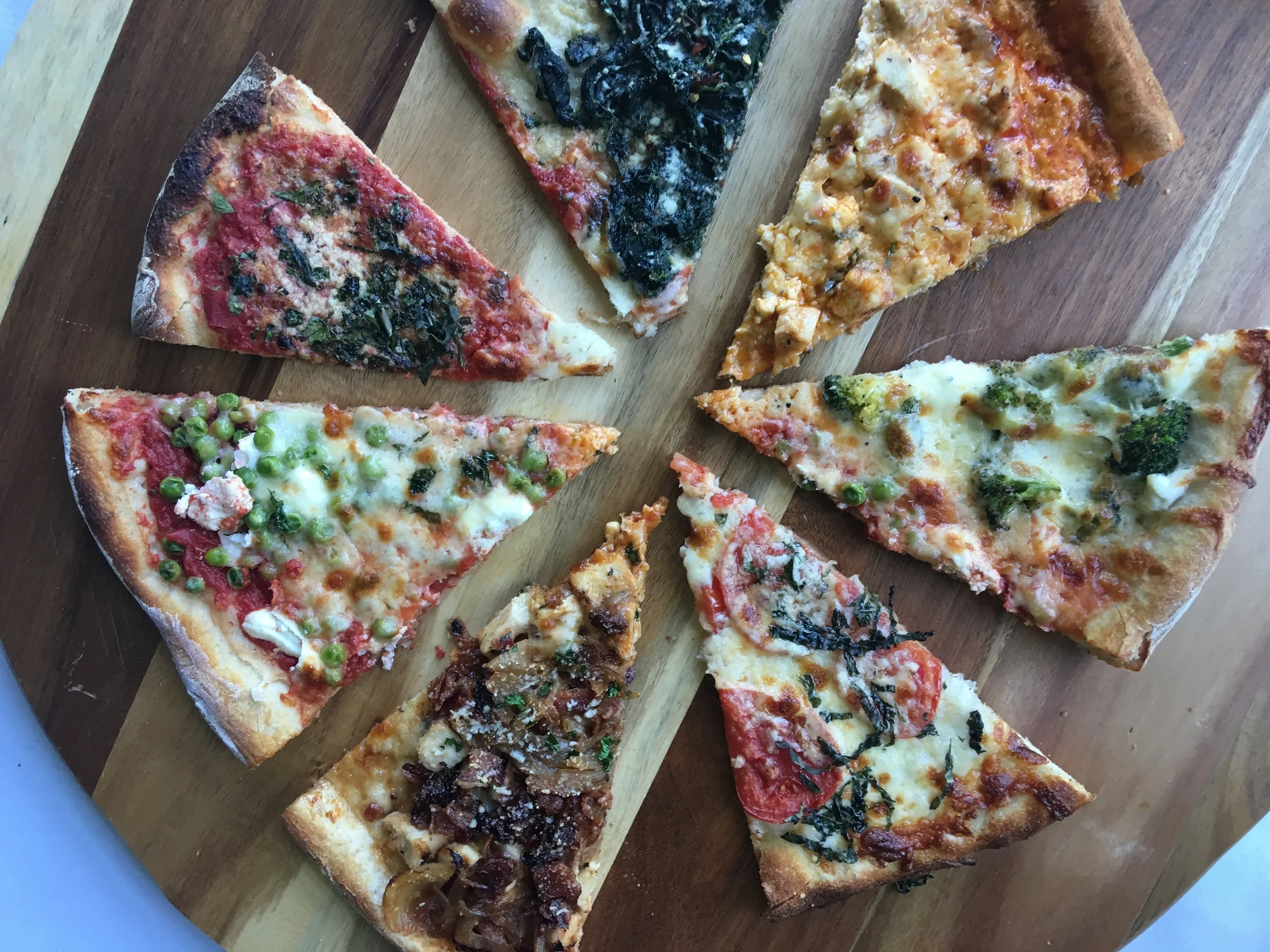
10 Reasons Why People Who Don't Like Pizza Shouldn't Be Trusted
10 Reasons Why People Who Don't Like Pizza Shouldn't Be Trusted:
1. They obviously don't understand life.
If you can't recognize that bread + cheese + sauce = life, you shouldn't be trusted.
2. They probably don't like sharing.
Pizza is the ultimate shareable food.
3. They don't know how to party.
If there's no pizza, is it really a party?
4. They are neglecting the circle of life.
This also means they probably don't like the Lion King.
5. They can't do math.
You cannot solve equations without thoroughly understanding pi.
6. They don't appreciate beauty.
Beauty is in the pie of the beholder.
7. They are probably an Axe Murderer.
The polls are still out on this one, but we're pretty sure this highly distrusted group of people make poor choices in restaurants too.
8. gluten-free crust has been invented, along with dairy-free cheese, and meat-less meats, so there's no medical reason you shouldn't have it.
What is your excuse?
9. They don't appreciate art.
MICHELANGELO WAS ITALIAN.
10. They probably don't like you.
If you don't like cheese, bread, sauce and toppings of your own choice, what do you like?


Minimum Wage: How Tip Pooling In Restaurants Could Be Beneficial
The minimum wage debate is a hot topic these days in the food world. Nobody on either side of the debate seems ready to settle on any middle ground. Some cities/states have raised the minimum wage to $15/hr already, and likely many more will follow. A byproduct of the minimum wage push, has been a few restaurants trying to bridge the gap in pay between the front of house (FOH) employees and back of house (BOH). The leading plan/trend to do so, is eliminating tipping. I am a little nervous writing about this publicly as I already know that some people won't agree with my opinion. Ahhh what the heck...let's do this topic.
My opinion on the minimum wage and the FOH/BOH pay gap is significantly varied. So I will take them one at a time starting with minimum wage. Keep in mind, this is an evolving world and I will continue to keep an open mind about these topics. I don't know everything, despite my oft boisterous claims to the contrary, but I do have an educated perspective as an owner in the field.
I don't believe that minimum wage jobs were meant to earn a living off of unless overtime opportunities are regular in a particular job. For example, my brothers worked landscaping way back when they were young as a summer job to earn money for use during the school year. They worked hard, and often were over 40 hours by Wednesday. It was hard work, and I usually laughed at their expense when they returned home for the day. Their boss pushed them hard, they were young and willing, and three months of work over the summer was exactly what they needed to live the rest of the year without working (read: they really wanted to focus on school so they could someday get into the restaurant business!!). Minimum wage positions are intended to be supplemental income for those who need a job that requires little training. Further, my brother's boss built his business based on that temporary labor influx at a low wage. It was a win/win situation. If my cretinous brothers could make it work, so can many others as long as they understand that it is not work intended to fully support a family. You do this work as added income to a household or to make ends meet while you acquire a skill that pays more.
Unfortunately, the economy has changed since then, and more people than ever are dependent on minimum wage jobs to support families. In that lies the basic problem: the business model is what it is. Businesses will maintain a certain labor percentage regardless of the rules imposed upon them. In full service restaurants that percentage is around 27%. Quick service restaurants are turning to new technology that eliminates the need for certain employees through ordering kiosks. Online ordering is gaining steam because we don't want to pay multiple phone personnel wondering which days we will get enough calls to make them worth while. Third party delivery companies like Uber are gaining popularity. Grocery stores implemented self-checkout years ago. The reason for this is as obvious as you think it is. Businesses are adjusting to the new rules in advance because they want to survive.
So, how can we fairly burden businesses to keep up with demand for products and services while maintaining their balance sheets at these new wages? My short, obtuse answer is, we can’t. Businesses will simply adjust to make their payroll percentage by eliminating staff or by raising prices. In my opinion, that is not good for the workforce. I am no economist. Actually, my ECON class was at 8am and I rarely attended because I like beer. However, I think many small businesses like ours share this same mentality. So even if the policy makers are correct, and we can tolerate all of the cost increases associated with a labor hike (there are many), I believe raising the wage too fast will cause labor stagnation while businesses adjust (not sure I am correct, time will tell, but that is one of the smartest sounding things I have ever said).
Two things that get overlooked or are basically ignored in this debate: 1. Although we obviously don’t want our payroll too high, we don't want our payroll percentage too low either. A low payroll percentage means that the volume is there, but the personnel to handle it is not. In that case, we will give poor service. The narrative of those who want to raise wages is that business owners are ruthless and treat employees unfairly. We did not get into hospitality because we enjoy treating people badly. We will not thrive if our staff is disgruntled. We want our staff to be happy at work because they are making good money, and feeling good about the job they are doing. We don't want them overworked and fielding complaints so we can save a few dollars on labor. That is how you slowly go out of business.
At our current pricing, we would have to cut about 35% of our service staff per shift if the minimum wage hits $15/hr. Think about the service you would receive vs what your service expectations are. FOH employees all make way above minimum wage anyway in our (and most) restaurants. Often you will read that service industry people make less than minimum wage. It is a nice soundbite, but entirely untrue! Servers for example, make $25/hr in a busy restaurant (I am ball-parking this stat and including tips). That's gooooood! They are undeserving servers who we all know are second rate citizens at best...KIDDING!!! I love them all almost equally Bottom line, they make good money and work part time. This leads to my second point, if there are under-performing restaurants out there where the staff does not make this wage, employees can leave that job if they can't make ends meet. Burdening the business with higher wages is not going to help an under-performing restaurant. It will sink them along with their employees! I really don't see the logic in this move except for in the back of the house...
The pay gap between BOH and FOH is too large. BOH employees generally work full time and make less than the FOH who work part time. That bothers me. Their job requires cooking skills, more cleaning, and manual labor, speed, and accuracy. They are also responsible for sanitation and safe food handling. They got skillz yo! There are not a lot of restaurants that offer $15/hr to their BOH staff. That would blow up the balance sheets and shutter many restaurants. Essentially everyone in the BOH will be making minimum wage in the near future when the minimum wage increase is mandated. The only ways I can think of to fix this pay gap are to raise prices or tip pooling. Raising prices is something that we truly don't like to do. You might say "yeah right", but seriously, why would I want to raise prices? That just upsets customers who can't fathom why chicken parm costs $25. We only raise prices to keep the business model in balance. That's the god's honest truth.
Tip pooling is the answer to the pay gap issue. Some think it is eliminating tipping. I don't. Eliminating tipping means straight pay across the board for restaurant staff because gratuity is built into the price of food and drink. The problems: servers can still go work elsewhere and make tips so they will. Their money comes on a check weekly or bi-weekly and is taxed higher. That just doesn't work well for college kids and is unreasonable. Those restaurants will have staff retention problems. Also, customers don't like seeing the higher prices even though their cost is actually the same.
Tip pooling seems more appropriate to me, however, there are some truly insane laws that surround tip pooling like if you don't serve food, you can't get a tip (I paraphrase so don't quote me, but I speak the truth). The laws vary state by state adding to the confusion. I try to keep up on this during my five minutes of free time. One smart operator has found what I think may be a loophole...they have all of the BOH employees deliver one dish to a table per shift. I do enjoy when someone outsmarts the laws. It is a perfect microcosm of what I described earlier...businesses will simply adjust regardless of the rules. So stop making more rules! Seriously, can't we just change the laws instead of having the dish washer deliver your food? Or pulling a cook off the line when we are slammed? There is a little part of me that wants to just eliminate all of these laws because they get in the way of good business. I know why we cannot eliminate the laws, but please understand how frustrating this is for any honest business person. We will jump through all the hoops because a couple of...don't curse Russell...jamokes treated their employees poorly. Grrrrr
Final thought, if we eliminate the tip pooling legal nonsense, people will get paid more fairly across the board in restaurants. It will create more connection between the cooks and the servers. Cooks will care more if a server royally sucks. Every dish they make will directly impact their income. That is better for you the consumer as it pertains to service. Never again will a guest say to me while complaining "well it wasn't the servers fault so I still tipped" (for the record that is not always true. Sometimes a poorly made dish is entirely the servers fault so stop saying that to me. I will figure out the blame. That is what I do. Then I usuuuually fix it).
Like I said, not every restaurant has our mentality in terms of fairness in pay. It sure would be nice if we didn't have to jump through all these hoops, which are presented seemingly daily of late, and could just focus on serving guests. We would reward our staff for their efforts.
SAVOR
This past weekend, we had the pleasure of serving food at SAVOR: A Celebration of Food, Wine, and Spirits presented by Foxwoods Resort and Casino. Chef Robert Irvine of The Food Network is the headliner for this annual event, and is accompanied by a few other celebrity chefs as well as local restaurants to make the event a full on gastronomic experience. The event is for charity and benefits all military personnel through the Robert Irvine Foundation. For those who have not attended this event, it is held in a ginormous room in the convention center in Hartford. People get a little boozy on wine, beer, and/or spirits, then they walk around tasting the food offerings from the local restaurants, and trying not to trip on the carpet. It is a fun time for us interacting with guests and potential guests, but also for the guests who get to try some innovative foods, and talk to their favorite chefs and restaurateurs. I imagine it is a prosperous weekend for the Uber drivers as well.

Behind the scenes, there are some noteworthy events as well that you all are not privy to. First, the locals like us show up in the giant kitchen which easily cost over a bajillion to build out. It is like walking into Yankee Stadium when you used to play for the Yard Goats. I always chuckle when I see all of the extra refrigeration units and ovens that go unused when we do this event or events in the Mohegan Sun kitchen. It truly is eye-popping to see all the excess of equipment. My brothers would vote me out of the partnership if I ever ordered kitchen equipment with such disregard. Anyway, we claim our space at the stove, fryolator, and prep tables only to be removed when the celebrity chefs arrive. We know it is coming and we work around them like their little brothers. Beau MacMillan has kicked me out of my space two years in a row and we had a good laugh about that. I forgive him because the Fried Chicken Bahn Mi he gave me last year still lingers in the forefront of my food brain. All of these celebrity chefs roll in with an entourage and puff their chests a little, but I gotta say, I am not bashing them for it. They are as gregarious in the kitchen as they are in front of the cameras and it creates a fun environment in the back of the house. The pressure is on all of us to perform, we eyeball each others food (discreetly of course), and we silently pass judgement. After a short while, everyone wants to try each others food in the kitchen and everybody realizes that there are a lot of really good cooks there.
This year we offered Arancini Fonduta and Meatball Sliders. These items are rustic and a true to what our restaurants offer. They are also delicious, and the arancini were probably the most popular item at the event (read: good drunk food). I would be lying if I said my inner foodie wasn't a little jealous of the hollowed out egg being served by Jeffrey Lizotte from On20 (it was wonderful), but we are not that kind of place. As our chef, Jeff Gantkin, reminded me, "Mary Ann Esposito just told us that these are the best arancini she has eaten since she was in Italy, and at least 20 people came back to the booth to tell us that this was their favorite thing to eat here." I think Chef Jeff wants to pound my inner foodie into a cutlet. Anyway, we are now discussing the logistics of adding the arancini to our menu. They were that popular.
Finally, I want to take a minute to thank Chef Irvine for his hospitality and his biceps. Both of which are impressive. He pounded a bunch of arancini and I think he hit up Plan B for some burgers, so I know his gym game is on point. He also goes out of his way to thank all the chefs in the kitchen who make this event a success. Not all celebrity chefs we have worked with in the past go the extra mile. Chef Irvine did and it doesn't go unnoticed. I can't think of too many reasons for anyone to venture into Hartford from the 'burbs, but this event is worth the trip.
Russ

Pay it forward continues
Every week we choose three amazing families to join us for dinner. Here is one of their stories:
Jim & Bettie
A friend wrote:
“After the death of their daughter, Robyn, Jim and Bettie Jeanne Rivard-Darby turned a tragedy into an opportunity to help others through the worst time in their lives. They bi-annually pay-It-forward in honor of Robyn on her birthday and anniversary of the day she died. In addition, they founded a new chapter of the Compassionate Friends, an organization dedicated to helping grieving parents, grandparents, and siblings. They found solace in this organization, but there was no local chapter. They spend their time organizing monthly meetings, coordinating the website and social media pages, reaching out to families who have suffered the greatest loss imaginable, and organizing fundraising events. Annually, they hold a walk-a-thon to raise money to help TCF continue to provide a place of comfort for those impacted by the death of a family member. They lost three elderly dogs and a beloved pet bird in the last year and have adopted a Dalmatian that they are training to become a therapy dog. In addition, Bettie Jeanne was a longtime caregiver for an elderly friend with dementia, recently taking her into their home for hospice and providing comfort and care until she passed away. Their grief and their work to support their chapter of TCF is deserving of a night out and would be a great gift. They do so much and give so much to help others, I would love to see someone give to them.”
We were honored to have Jim & Betty join us for dinner, and to hear their story in person! Find out why we're doing this on our website.
Click here to nominate a family for our Glastonbury location: